Commentary: Is singer Siti Sarah’s death changing Malaysian attitudes towards COVID-19?
Ad
Commentary
Commentary: Is vocalist Siti Sarah's expiry changing Malaysian attitudes towards COVID-nineteen?
Her passing has turned the spotlight on ramping upwards vaccination for pregnant mothers. But the surge in cases too is prompting more care, says Serina Rahman.

Malaysian singer, Siti Sarah Raissuddin. (Photo: sitisarahraissuddin)
13 Aug 2022 06:07AM (Updated: xiii Aug 2022 06:51AM)
JOHOR BAHRU: Malaysia's celebrity scene suffered a number of COVID-related deaths over the last few weeks, from Yuna'due south cousin and best friend, Amilya Saila Aminoddin, to vocalizer Joyce Leelyn and on Monday (Aug 9), Siti Sarah Raisuddin.
Siti Sarah's decease was heart-breaking. The news garnered international coverage, not because she was an incredibly popular singer (though she is), just because she was heavily pregnant when she tested positive for COVID-19.
When her oxygen levels plummeted last week, she was placed in intensive care. Doctors performed a caesarean section to save her baby and put her under an induced blackout. Her child, Ayash Affan, survived, but she succumbed three days later.
Her death brought the severity of COVID-nineteen into sharper focus for many who had previously downplayed or even denied its dangers.
The outpouring on social media was huge. Prime Government minister Muhyiddin Yassin, fifty-fifty the king and queen, expressed their condolences.
A REALISATION SINKING IN
For many Malaysians, it has finally sunk in that the virus tin can achieve anybody, no matter their wealth condition or age.
Siti Sarah's husband, comedian Shuib Sepahtu, confessed that he besides should accept taken the virus more seriously. Siti Sarah had non been vaccinated. He at present encourages everyone to get the jab one time they can, and similar Yuna, is stressing the demand to employ oximeters to runway the health of loved ones under quarantine.
Siti's case wasn't the only report of a pregnant female parent losing her life to the pandemic. Siti Aishah Mohd Zamri, a 26-year-old pregnant nurse, and her baby passed in June after she contracted the virus from a patient in Labuan.
In February, another nurse in Kuala Lumpur succumbed to the virus but her baby was saved.
What's the mood in Malaysia afterward so many rounds of restrictions? Notice out every bit CNA speaks to Malaysians in Johor, Kuala Lumpur and Sabah on Middle of the Matter.
Between March and June, 3,396 significant mothers tested positive with COVID-xix; 70 died in 2021, Wellness Director-Full general Noor Hisham Abdullah revealed on Thursday. Seventeen were recorded in June lone, of which 15 were not vaccinated while two had received a first dose. There were no such deaths in 2020.
COVID-19 REACHING Even RURAL PARTS OF MALAYSIA
Siti Sarah's death was a national focal point that drove dwelling house the severity of the pandemic. But attitudes arguably shifted when Malaysia was plunged into crisis with this latest wave.
How anyone can still doubt the dangers of COVID-xix in Malaysia and the importance of vaccination is a mystery when new cases remain at record-highs.
There have been betwixt 17,000 and almost 21,000 new cases each day over the by calendar week and a new high of 360 deaths on Aug 8. More than than one,095 are in intensive care, with half needing breathing assistance.
Although the Klang Valley dominated contempo headlines with its surge in cases, the more worrying development has been news of the virus spreading to Malaysia's virtually rural areas.
To stem the spread, several ethnic communities across Peninsular Malaysia, even those in the deep interiors of East Malaysia, have been put nether Enhanced Movement Control Orders (EMCO), preventing anyone from traveling in or out of the villages.
Other villages accept taken the initiative to block off entry to outsiders. While nearly indigenous communities would traditionally exist safely isolated from pandemics, there have been reports of returnees from mill piece of work in nearby towns such as in the Semai villages of Batang Padang, Perak, testing positive and infecting others.
Ethnic clusters accept also originated from funeral gatherings, where infected and unwell family members return to pay their terminal respects, such as in Mukah, Sarawak which resulted in 600 new cases.
In the sub-district of Mukim Tanjung Kupang, 22km away from the nearest town, and merely under the Second Link bridge to Singapore, there are now more than 480 active cases and several deaths to date.
While this has ever been a traditional fishing customs, and older farmers and fishermen should be sheltered from the spread, youths working in surrounding factories or the nearby port have consequently brought home the virus. On one street in Taman Desa Paya Mengkuang, about every other firm has seen COVID-positive patients taken away by the Ministry of Health for quarantine every 24-hour interval over the last ii weeks.
This could exist a larger, more worrying phenomenon. Kedah and Kelantan, both largely rural states, also registered more than ii,000 new cases on Aug 12, by and large from workplace clusters. Johor and Sarawak are non far behind. The virus epicentre is moving.
SHIFTING ATTITUDES
Atheism in the severity of COVID-xix was common in the early days of Malaysia's pandemic fight.
Many rural folk could not understand or chronicle to the high numbers and deaths occurring in city centres. They were also against the idea of getting vaccinated, when widespread conspiracy theories and misinformation fanned fear.
At present that expiry has literally come to their doorsteps, attitudes are irresolute. There is a heightened sense of urgency. Vaccines are now seen as the only hope of safety. The people I speak to now inquire why they are not getting chosen upward to exist vaccinated.
Some who once refused to believe they were in whatever danger and insisted on holding family gatherings are at present existence more than careful.
Now, I frequently hear them reproach others considering skipping a vaccine date.
"Past speaking almost this virus, you are uttering a prayer that it volition come here. If you don't talk nigh it, it won't come up. Don't exaggerate," I was in one case told.
Now a yr later, the more common brushoff I hear are those urging circumspection. "Please be conscientious when you become into the town. Don't get too often, we don't know who has this virus. It is so infectious."
Instead of ridiculing those who take extra care, people admonish those who break quarantine requirements or have COVID-19 lightly.
MIXED REACTIONS TO LIFTING RESTRICTIONS
Equally the government begins to announce relaxed restrictions for states in Phase 2 and 3, besides as for those with consummate vaccinations this week, reactions have been mixed.
While rural communities hard hit by 10km travel restrictions welcome the easing of the rules for economic reasons, there is trepidation. Many are concerned that those from places with high infection numbers like Selangor and Kuala Lumpur tin travel freely. They are keenly aware that the fully vaccinated can withal infect others.
In Mukim Tanjung Kupang, the locals I speak to detect it incredulous they can simply fully open their food stalls, travel freely or dine out if they are fully vaccinated. They say that so many have been waiting for an appointment but cannot become one.
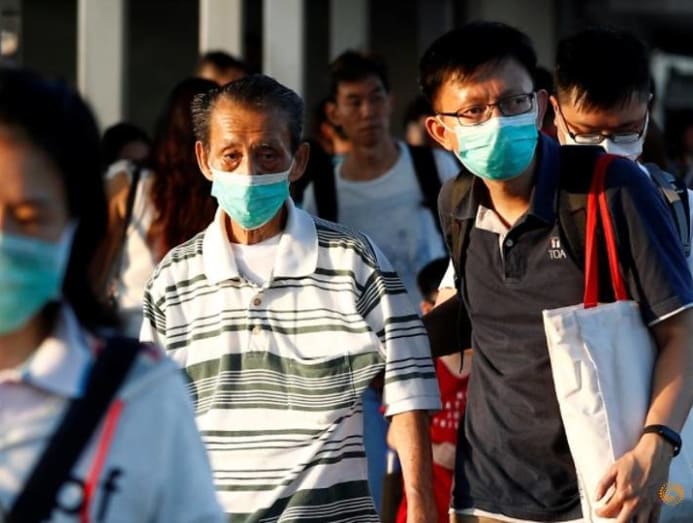
Overall, while in that location is yet uncertainty over how constructive vaccines are, there is an overriding general resignation that they hold the best chance for conditions to revert to some kind of normalcy.
After seeing so many families getting infected, quarantined and suffering, the angst over endmost the economic system has largely dissipated and people are fifty-fifty asking for some factories to close, accepting some financial hurting in exchange for halting the spread.
Whether information technology was Siti Sarah's decease or the virus hitting hard at home, the silver lining is the evolution of attitudes: A clearer understanding of COVID-19 and the realisation of the importance of taking every possible precaution.
It now remains up to the authorities to ensure that more than vaccinations are made available to those beyond the Klang Valley and Sarawak where the bulk of the doses have been directed thus far.
For the Delta variant is now running wild in the boondocks, and who knows what other variant lurks on the horizon.
Dr Serina Rahman, Visiting Fellow at the ISEAS-Yusof Ishak Institute, writes from Johor where she's in lockdown with the rest of Malaysia.

Recent Searches
Trending Topics
Source: https://cnalifestyle.channelnewsasia.com/commentary/siti-sarah-death-pregnant-malaysian-singer-celebrity-covid-285986
0 Response to "Commentary: Is singer Siti Sarah’s death changing Malaysian attitudes towards COVID-19?"
Postar um comentário